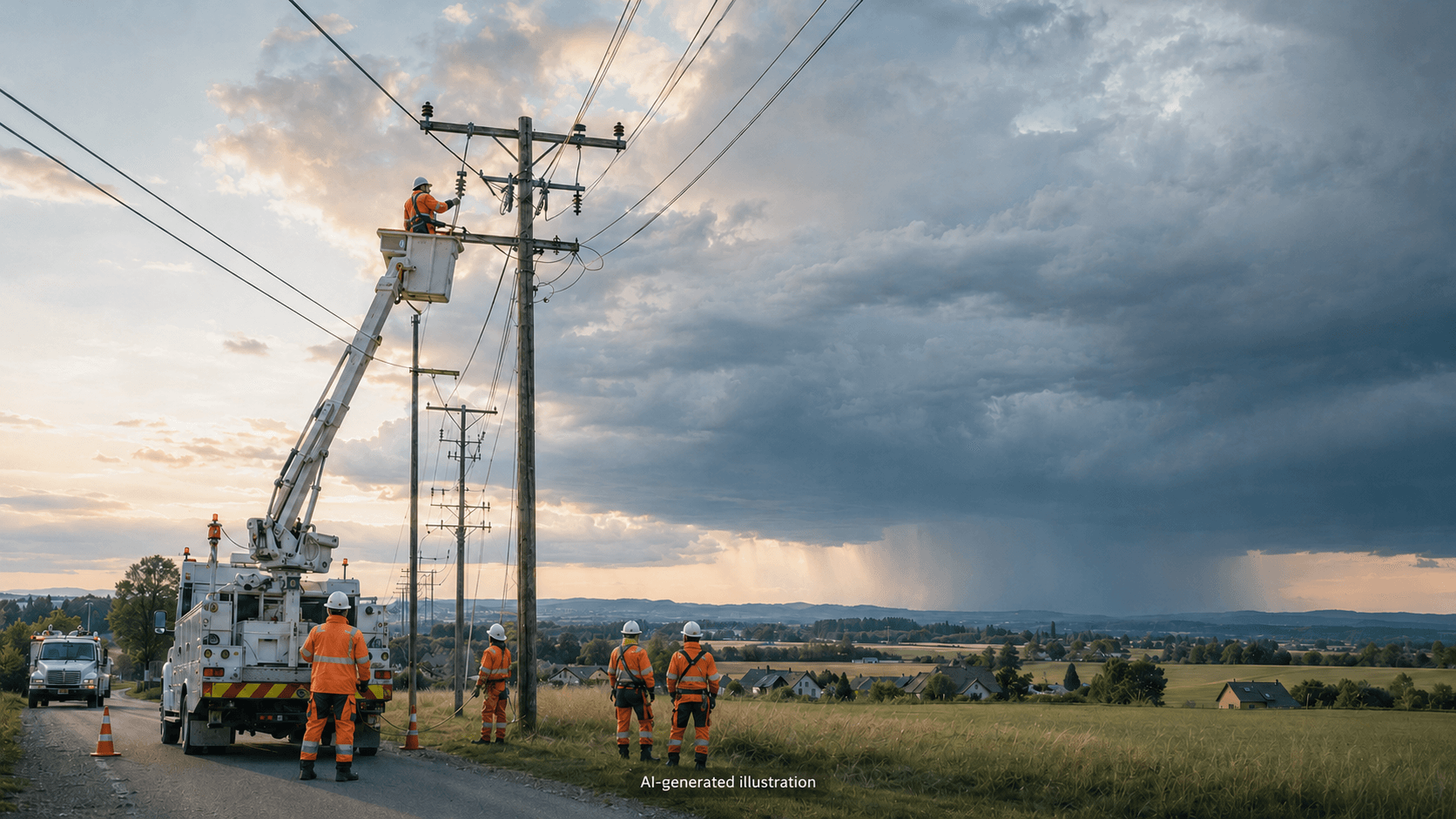
The Hidden Cost of Bad Weather Forecasts in Supply Chain
Weather delays cost logistics $36B annually. Most of this is due to vague forecasts. Discover how hyperlocal data reduces the 'Weather Bullwhip Effect'.
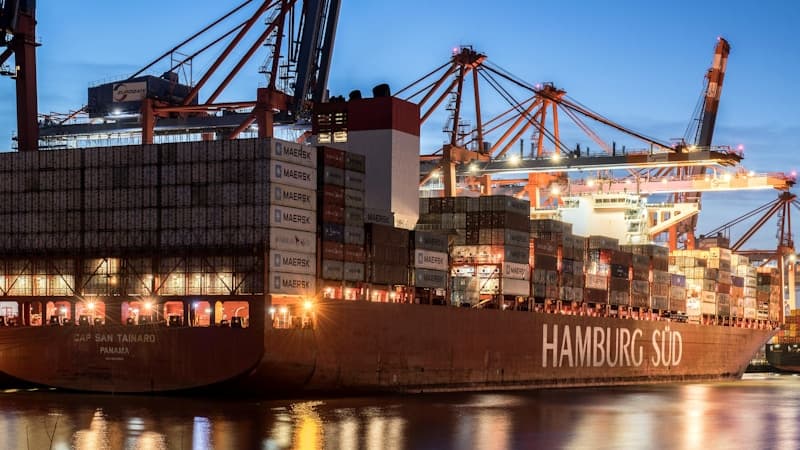
The Butterfly Effect in Logistics
A sudden rainstorm in Mumbai delays a shipment of textiles by six hours. This causes a missed connection at the port of Rotterdam. The container sits for three days waiting for the next vessel. The factory in Ohio, running on Just-in-Time (JIT) principles, runs out of material. The assembly line stops.
This is not a hypothetical scenario. It is the daily reality of global logistics. While supply chain managers obsess over fuel costs and route optimization, they often treat weather as an unavoidable "Act of God."
They shouldn't. In 2024 alone, weather-related delays cost the global logistics industry an estimated $36 billion. The tragedy is that a significant portion of these losses wasn't caused by the weather itself, but by inaccurate forecasts about the weather.
The High Price of "Maybe"
The standard weather data used by most logistics platforms comes from global models (like GFS or ECMWF) that update every 6 to 12 hours with a resolution of 9-27 kilometers. In the world of logistics, a 27km grid is huge. It can be raining torrentially at the port terminal while the airport 15km away is dry.
When forecasts are vague or outdated, logistics managers face two expensive choices:
- Risk it: Hope the forecast is wrong and proceed, risking safety incidents or stalled assets.
- Buffer it: Pad the schedule, carry extra inventory, or reroute unnecessarily.
This uncertainty creates what economists call the "Weather Bullwhip Effect." A 10% uncertainty in a weather forecast can lead to a 50% increase in safety stock inventory to hedge against potential delays.
Deep Dive: Quantifying the Error
Let’s look at the cold chain logistics sector. Pharmaceutical and food transport requires strict temperature controls.
If a forecast predicts an ambient temperature of 25°C, a refrigerated truck (reefer) is set to a specific power mode to maintain internal zero degrees. If the actual temperature spikes to 32°C, a common variation in urban heat islands, the cooling unit must work overtime, burning 15-20% more fuel.
Conversely, if the driver expects a storm that never arrives and takes a 200-mile detour, that is pure waste.
Case Study: A major European rail operator found that 30% of their "precautionary slowdowns" for high winds were unnecessary because the wind gusts were localized and missed the tracks by a few kilometers. The cost of these false alarms? €4 million annually in delay penalties and overtime wages.
Skyfora's Advantage: Hyperlocal Certainty
Supply chains operate on nodes (ports, warehouses, airports) and edges (roads, rail, shipping lanes). Skyfora’s GNSS technology aligns perfectly with this infrastructure.
By utilizing the dense network of GNSS receivers often already present near logistics hubs and along highways (via telecom infrastructure), Skyfora provides:
- 1km Resolution: We can distinguish weather conditions at the port terminal vs. the port entrance.
- 15-Minute Updates: While the Global Model is still processing its 6-hour run, Skyfora provides 24 updates. This allows dispatchers to "thread the needle", finding safe windows for takeoff, crane operations, or driving during volatile weather.
Practical Applications
Here is how this data translates to ROI:
- Port Operations: Crane operations usually stop when winds exceed 20 m/s. Hyperlocal wind data can identify that the gust front will pass in 10 minutes, allowing operations to pause briefly rather than shutting down for the shift.
- Route Optimization: Delivery algorithms can dynamically reroute vehicles based on street-level flood risks, avoiding traffic snarls before they form.
Conclusion
In a margin-thin industry like logistics, you cannot afford to manage risk with a 27-kilometer pixelated map. The technology now exists to treat weather not as a vague risk, but as a precise data point in your optimization algorithms. The companies that integrate hyperlocal weather data into their TMS (Transportation Management Systems) aren't just predicting the rain, they're protecting their bottom line.