The Pineapple Express: California's Water Lifeline and Threat
The Pineapple Express brings 50% of California's water but also major floods. Learn how GNSS helps dam operators manage this tropical firehose.

The Tropical Connection
For the West Coast of the US, the "Pineapple Express" is a household name. It is a specific type of Atmospheric River that originates near Hawaii (hence the pineapple) and stretches all the way to the Pacific coast.
This isn't just a storm; it is a firehose connecting the tropics to the temperate zone. A strong Pineapple Express can transport 20 times the volume of water of the Mississippi River in the form of vapor.
It is a double-edged sword. California relies on these events for up to 50% of its annual water supply. A year without a Pineapple Express is a drought year. But a year with too many, or one that is too intense, means catastrophic flooding, levee breaches, and landslides.
The Reservoir Roulette
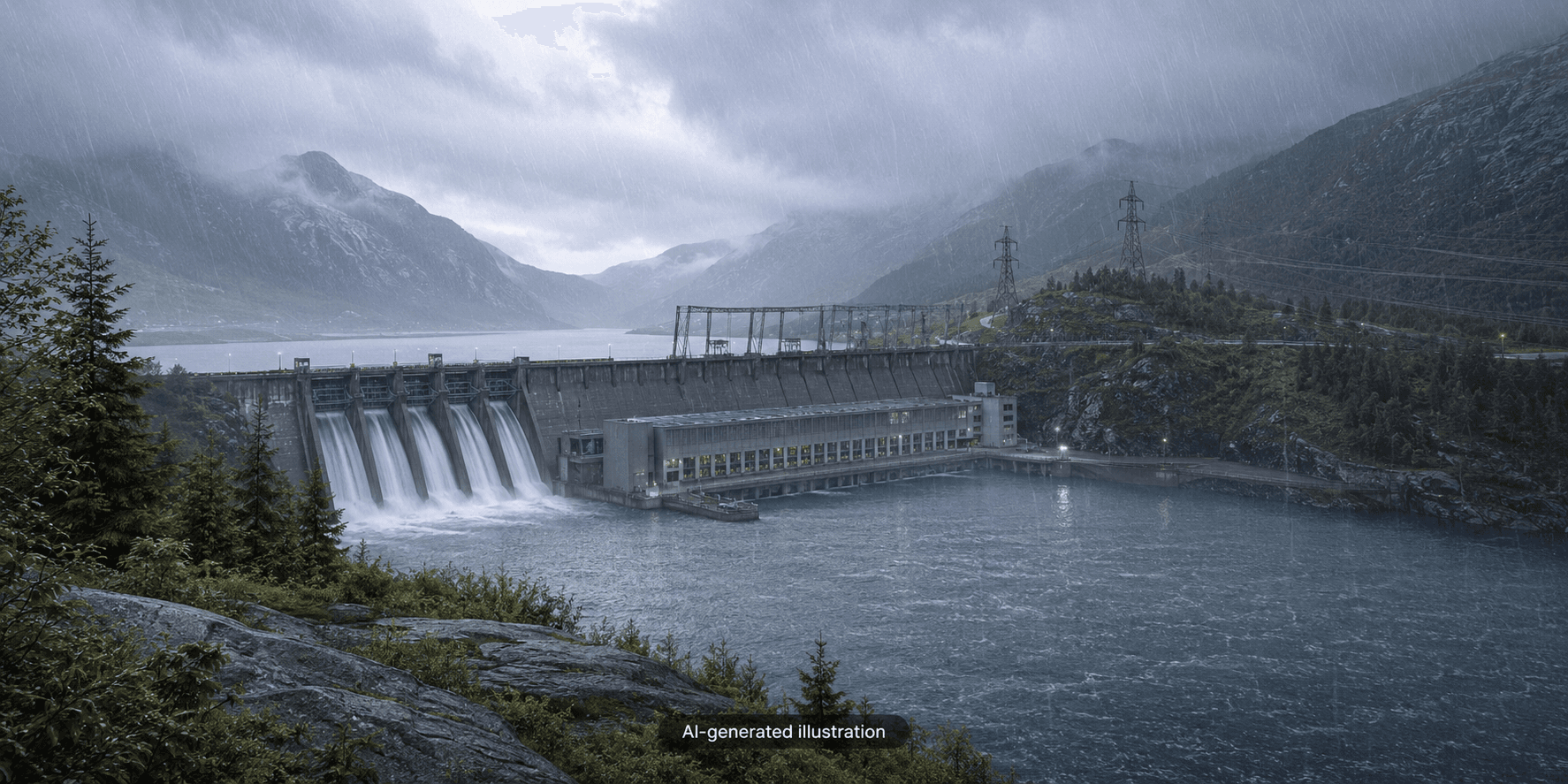
Water managers in California play a high-stakes game.
- Scenario A: Keep the dam full to save water for summer. Risk: If a massive Pineapple Express hits, the dam overflows, flooding the city below.
- Scenario B: Release water now to make room for the storm. Risk: The storm misses or is weaker than predicted. You just dumped precious water into the ocean during a drought.
To win this game, managers need Forecast-Informed Reservoir Operations (FIRO). They need to know, with high certainty, exactly how much water is coming 72 hours in advance.
Deep Dive: Why GNSS is Critical for the West Coast
The Pineapple Express travels over the vast, data-sparse Pacific Ocean.
Skyfora’s technology aids this specific problem in two ways:
- Island Hopping: We utilize GNSS receivers on Hawaii and shipping vessels to catch the "head" of the river days before it reaches the mainland.
- Coastal Wall: Our dense network along the California coast acts as a "catcher's mitt," measuring the precise flux of vapor as it crosses the shoreline.
Crucially, we measure the Freezing Level.
In a Pineapple Express, the air is warm (tropical). This means rain falls at high elevations where snow usually sits. This "Rain on Snow" event is the worst-case scenario: the warm rain melts the existing snowpack, doubling the runoff instantly. GNSS vertical profiling identifies exactly where the freezing level is (e.g., 7,000 feet vs 5,000 feet), allowing hydrologists to calculate runoff with precision.
Practical Applications
- Levee Management: Emergency crews can reinforce specific levee sections based on precise river level forecasts derived from our runoff models.
- Agriculture: Farmers in the Central Valley can prepare to capture "recharge" flows to refill underground aquifers if they know a surplus is confirmed.
Conclusion
The Pineapple Express is the heartbeat of California's water cycle. Managing it requires more than looking at clouds; it requires measuring the invisible river of vapor and heat that drives the system. With GNSS, we turn a game of roulette into a calculated science.