Weather Accuracy and Energy Trading: A €10M Lesson
In energy trading, a slight wind forecast error can cost millions. See how 15-minute GNSS updates give traders the edge in volatile power markets.
The Marginal Megawatt
In the European energy market, electricity prices change every 15 minutes (and sometimes shorter). These prices are driven by supply and demand. On a windy day in the North Sea, wind power floods the grid, and prices can drop to zero, or even go negative. When the wind dies unexpectedly, prices can spike to €500/MWh in minutes as expensive gas peaker plants fire up to fill the gap.
For energy traders, weather is the market.
But here is the reality: A trader who relies on the standard "00Z" and "12Z" model runs (updated every 12 or 6 hours) is trading on stale information. They are effectively driving looking in the rearview mirror.
Case Study: The Cost of the Wrong Curve
Let’s look at a real-world scenario from late 2024. A mid-sized energy trading desk in Germany had a large position in wind futures. The standard GFS model predicted sustained winds of 12 m/s across the northern plains for the afternoon peak.
Based on this, the desk shorted the market, expecting a surplus of power and low prices.
However, a subtle atmospheric inversion layer (undetected by the global model) dampened the surface winds. The actual wind speed was only 8 m/s.
Because wind power generation is cubic (a 50% drop in wind speed can mean an 87% drop in power), the grid was suddenly short of gigawatts. Prices spiked. The trading desk, caught on the wrong side of the trade, lost €10 million in four hours. They were right about the macro trend, but wrong about the magnitude.
Deep Dive: The 15-Minute Advantage
In energy trading, Information Asymmetry is profit. If you know the wind is dying 30 minutes before the rest of the market, you win.
Skyfora empowers traders with this asymmetry through:
- Ramp Rate Prediction: We don't just predict "windy." We predict the exact moment the wind ramps up or down. This gradient determines how fast the grid needs to react.
- Clouds & Solar: For solar trading, fog and clouds are the enemies. Traditional satellites struggle to distinguish low fog from snow cover. GNSS tomography detects the low-level humidity layer that creates fog, predicting burn-off times with high accuracy.
- Intraday Updates: Our 15-minute update cycle aligns perfectly with the 15-minute settlement windows of modern power exchanges (like EPEX SPOT).
Skyfora's Advantage: Vertical Profiling for Turbines
Most weather stations measure wind at 10 meters (standard height). But modern wind turbines stand 150 meters tall. The wind at the hub height can be completely different due to wind shear and inversions.
Skyfora’s vertical atmospheric profiling allows us to model the stability of the atmosphere column. A stable atmosphere decouples the upper winds from the surface winds.
If a trader uses surface data to estimate hub-height production, they might be wrong. Skyfora provides the vertical context to estimate wind speeds more correctly at 100m, 150m, and 200m.
Practical Applications
- Algorithmic Trading: Quantitative funds ingest our API directly into their trading bots to execute sub-second trades based on weather shifts.
- Balancing Authorities: Grid operators (TSOs) use the data to call upon battery reserves more efficiently, saving consumers money.
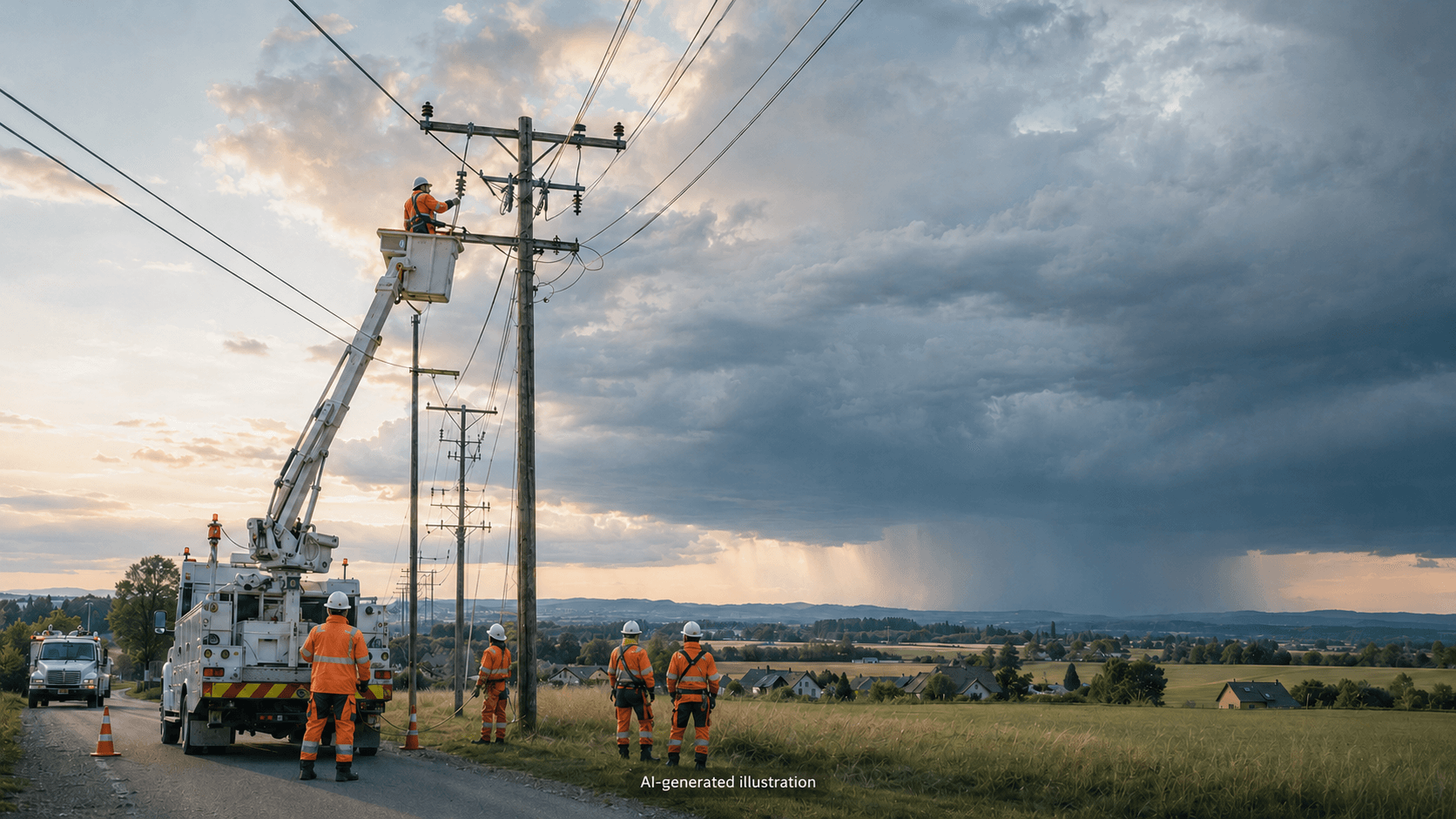
- Asset Optimization: Wind farm owners can schedule maintenance during verified "lulls," ensuring turbines are spinning when prices are highest.
Conclusion
In energy markets, being "mostly right" is the same as being wrong. The difference between profit and loss is often a variance of 2 meters per second in wind speed or 15 minutes in cloud cover duration. GNSS weather data provides the edge needed to navigate the volatility of the green energy transition.