What Are Atmospheric Rivers and Why They Matter More Than Ever
Atmospheric Rivers cause more flood damage than hurricanes in many regions. Learn how GNSS technology detects these invisible rivers 48 hours before traditional methods.
The River Above Our Heads
In early 2024, California faced a deluge that caused over $11 billion in damages and flooded regions that had been in drought for years. The culprit wasn’t a hurricane, nor was it a standard frontal system. It was an Atmospheric River (AR), a narrow corridor of concentrated moisture in the atmosphere.
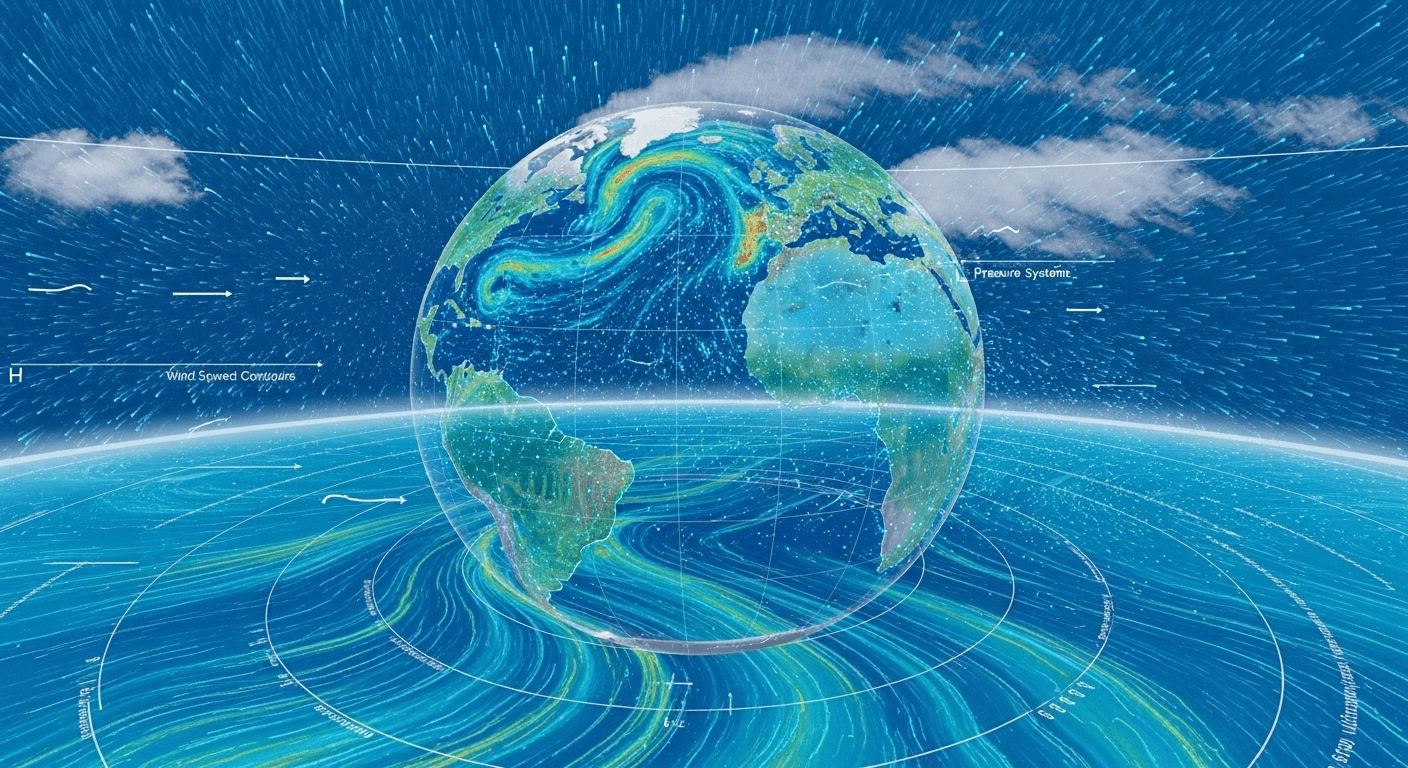
While hurricanes get the names and the headlines, atmospheric rivers are the silent giants of the water cycle. A strong AR can transport an amount of water vapor roughly equivalent to the average flow of water at the mouth of the Mississippi River. When these ribbons of moisture make landfall and strike mountain ranges, that vapor condenses instantly, unleashing torrential rains and catastrophic snowpacks.
As our climate warms, the atmosphere holds about 7% more water vapor for every degree Celsius of temperature rise. This means ARs are becoming wetter, more intense, and harder to predict. For utility managers, city planners, and emergency responders, understanding ARs is no longer academic, it’s a matter of survival.
The Prediction Problem: Why Radar Isn't Enough
The physics of an atmospheric river are relatively well understood, but predicting exactly where and when one will strike remains a massive challenge for traditional meteorology.
Here is the core issue: Traditional weather radar is fantastic at seeing rain after it has formed. Satellites are great at seeing clouds from above. But atmospheric rivers are defined by the massive volume of invisible water vapor flowing before it condenses into rain.
Most forecast models rely on radiosondes (weather balloons) to measure this vapor. But balloons are launched only twice a day from locations spaced hundreds of kilometers apart. Imagine trying to map the flow of the actual Mississippi River by dipping a bucket into it once every 12 hours at three specific spots. You would miss the surges, the eddies, and the changing currents. That is exactly what is happening with our current observation network.
This data gap leads to "landfall error." A forecast might predict an AR will hit San Francisco, but a shift in wind patterns pushes it 100km south to Monterey. That difference determines whether a reservoir needs to dump water to prevent overflow or hoard it for the dry season.
Deep Dive: The Anatomy of Moisture Transport
Atmospheric rivers are essentially the conveyor belts of the planet, responsible for over 90% of the poleward water vapor transport. They are long (up to 2,000 km) and narrow (typically 300-500 km wide).
When an AR approaches the coast, it interacts with topography. This is known as orographic lift. As the moist air is forced up the side of a mountain range (like the Sierra Nevada), it cools. Cold air cannot hold as much moisture as warm air, so the vapor rapidly condenses into rain or snow.
The intensity of an AR is measured by Integrated Water Vapor Transport (IVT).
- Weak ARs are beneficial; they provide crucial water supply.
- Strong to Extreme ARs (IVT > 1000 kg/m/s) are hazardous.
Recent studies from 2023 suggest that standard Numerical Weather Prediction (NWP) models often underestimate the peak intensity of ARs by 15-20% because they lack high-resolution vertical profiles of the humidity in the lowest levels of the atmosphere, exactly where the "river" flows.
Skyfora's Advantage: Seeing the Invisible River
This is where Skyfora’s approach fundamentally shifts the paradigm. Instead of waiting for balloons or inferring moisture from satellite imagery (which struggles to see through heavy clouds), Skyfora utilizes GNSS tomography.
Every time a GPS/GNSS satellite sends a signal to a ground receiver, that signal is slightly delayed by water vapor in the atmosphere. By analyzing these delays from thousands of receivers, including existing telecom towers, Skyfora creates a 3D map of atmospheric water vapor in real-time.
The specific advantages for AR detection include:
- 48-Hour Advance Detection: Because GNSS sensors detect the vapor surge well before cloud formation, we can identify the intensification of an AR up to 48 hours earlier than models relying solely on radar and satellite.
- Offshore Continuity: By integrating data from coastal and island-based GNSS stations, we can track the "head" of the river as it approaches land with 1km resolution.
- Vertical Profiling: We don't just see total moisture; we see the vertical distribution. Knowing whether the moisture is concentrated at 1,000 meters or 5,000 meters is critical for predicting snow levels versus rain levels.
Practical Applications
The implications of better AR forecasting are measured in billions of dollars:
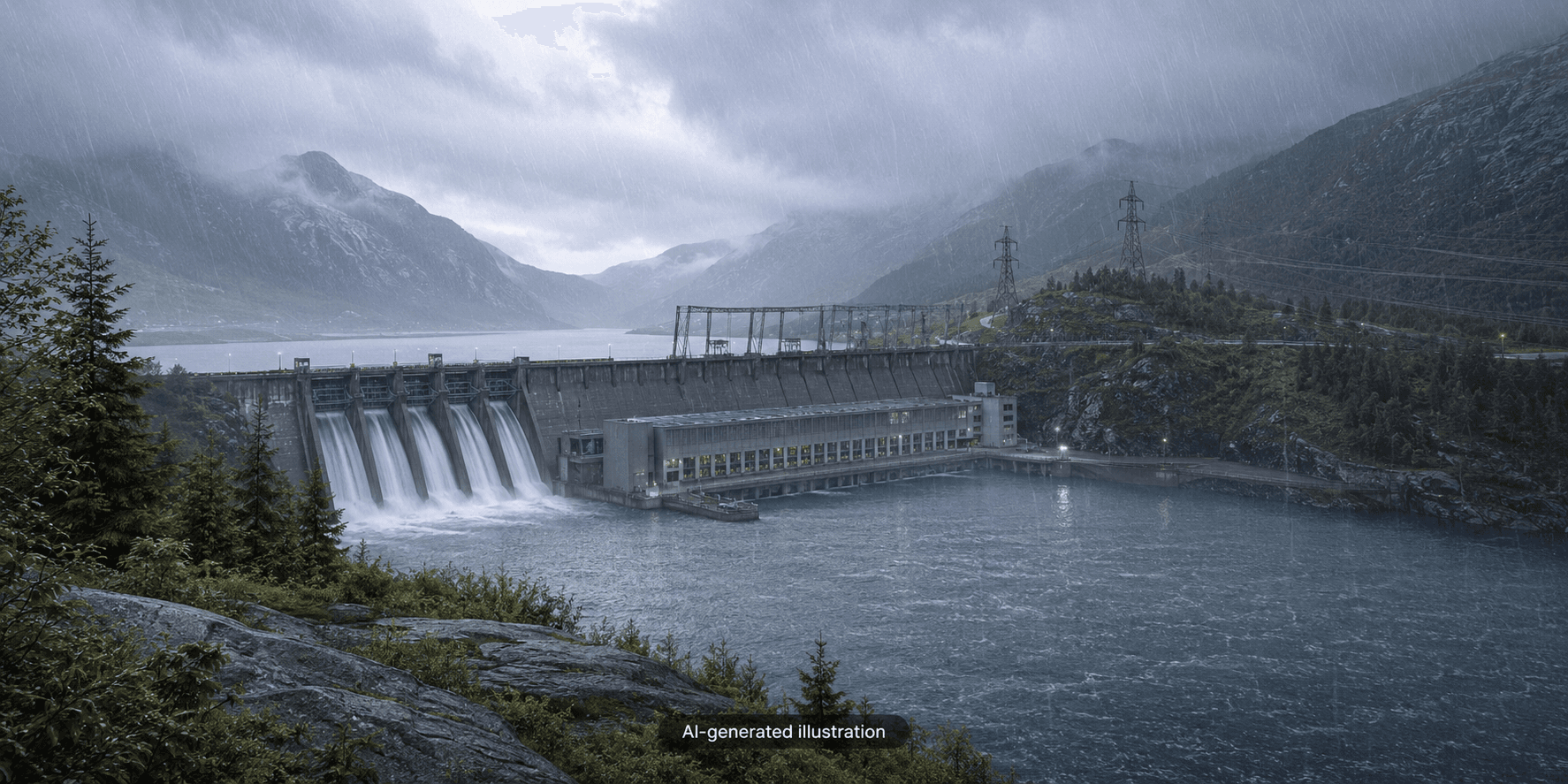
- Reservoir Management: Dam operators can confidently release water 3 days ahead of a storm to prevent overflow, known as Forecast-Informed Reservoir Operations (FIRO).
- Emergency Services: precise landfall predictions allow cities to position sandbags and rescue crews in the specific neighborhoods most at risk, rather than alerting an entire county.
Conclusion
Atmospheric rivers are the dominant driver of water supply and flood risk in many parts of the world. Treating them with the same urgency as hurricanes is the first step. The second step is equipping our forecasters with eyes that can see the invisible fuel of these storms. With GNSS tomography, we aren't just guessing where the river will flow; we're measuring the current.