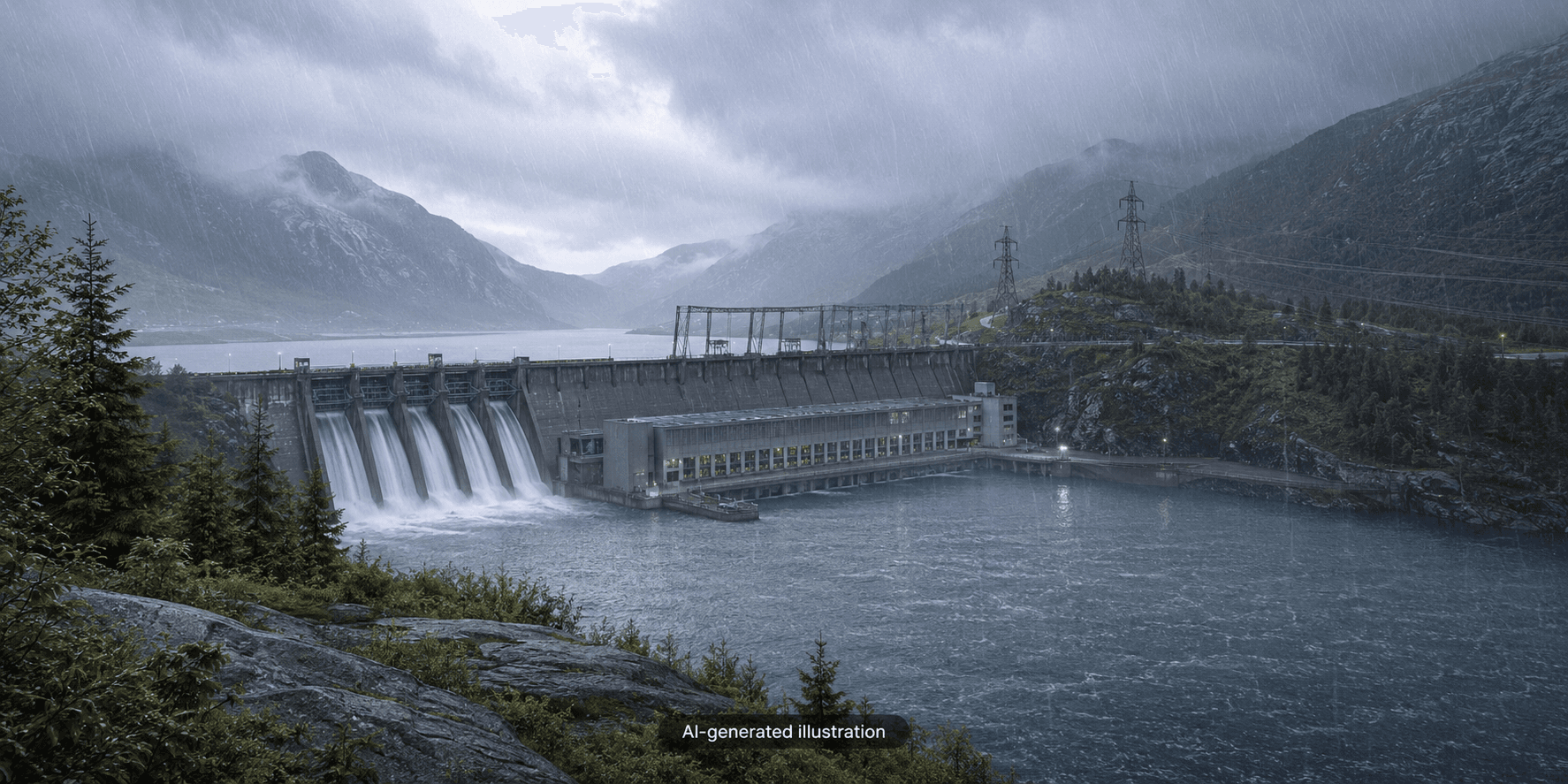
Wind Shear: The Silent Danger in Clear Skies
Radar can't see turbulence in clear skies. Discover how GNSS signal fluctuations reveal invisible wind shear zones to keep flights smooth.
Turbulence Without a Cloud in Sight
You are cruising at 35,000 feet. The seatbelt sign is off. The coffee is being served. The sky outside is a perfect, deep blue. Suddenly, the plane drops 500 feet in two seconds. Coffee hits the ceiling; passengers scream.
This is Clear Air Turbulence (CAT), often caused by Wind Shear.
Wind shear is a change in wind speed and/or direction over a short distance. It can happen horizontally (crossing a front) or vertically (climbing through different air currents).
While pilots can use radar to see storms, radar relies on bouncing signals off water droplets. In clear air, there are no droplets. The radar screen is black, but the danger is real. CAT injuries cost airlines millions annually in medical claims, crew downtime, and aircraft inspection.
The Mechanism: Friction in the Sky
Wind shear often occurs near the Jet Stream, a river of fast-moving air high in the atmosphere.
Imagine a fast-flowing river moving next to a stagnant pond. At the boundary where they meet, you get chaotic eddies and swirls. The same happens in the sky. When a layer of 100-knot wind slides over a layer of 50-knot wind, the friction between them creates invisible tumbling waves of air (Kelvin-Helmholtz instability).
As climate change intensifies the temperature gradient between the poles and the equator, studies show the Jet Stream is becoming more unstable, leading to a predicted 150% increase in severe CAT by 2050.
Deep Dive: Detecting the Undetectable
Since radar is useless here, pilots currently rely on "PIREPs" (Pilot Reports). Essentially, the first plane to hit the turbulence warns the planes behind it. It is a crude, sacrificial warning system.
Skyfora offers a technological solution.
While GNSS tomography detects water vapor, the refraction of GNSS signals also contains information about atmospheric density and turbulence.
By analyzing the scintillation (rapid fluctuations) of GNSS signals as they pass through turbulent layers, we can infer the presence of shear zones. Furthermore, our ability to profile wind speed vertically (using the drift of the signal delay pattern across a dense network) allows us to map the wind gradient directly.
Skyfora's Advantage: The 3D Shear Map
Skyfora generates a 3D volumetric map of the atmosphere that highlights layers of high shear potential.
- Vertical Resolution: We can identify that the shear is specifically between Flight Level 340 and 360.
- Prediction: Unlike PIREPs which are reactive, our thermodynamic monitoring can predict the formation of shear zones before they become violent.
- Global Coverage: By utilizing satellite-to-satellite occultation (signals passing between satellites), we can even detect shear over oceans where ground sensors don't exist.
Practical Applications
- Flight Planning: Airlines can route flights 2,000 feet higher or lower to surf the smooth air, saving fuel and preventing injuries.
- Drone Stability: For delivery drones, even moderate shear can be destabilizing. Hyperlocal shear maps ensure drones don't get flipped over by invisible gusts between buildings.
Conclusion
Clear Air Turbulence has long been the "ghost" of aviation, feared but unseen. With advanced signal processing, we are finally turning the lights on. We can't stop the wind from shearing, but we can tell you exactly where the bumps are before you spill your coffee.