From Global to Regional: Why AI Weather Models Need Denser Observations, Not Just More Compute
AI weather models are moving from global to regional. But they need denser observations, not just more compute. Discover the data gap.

The AI Weather Revolution
In 2023, Google's GraphCast and DeepMind's GraphCast AI models stunned the meteorology world. They matched or exceeded traditional physics-based models in global weather forecasting, using machine learning instead of complex atmospheric equations. The promise: faster, cheaper, more accurate forecasts.
But there's a catch. These AI models excel at global forecasting—predicting weather patterns across continents. When researchers tried to downscale them to regional forecasting—predicting weather in specific cities or valleys—performance degraded significantly. The models could predict a storm would hit California, but they struggled to predict which neighborhood in Los Angeles would get the most rain.
The problem isn't the AI models themselves. It's the data they're trained on. AI weather models need dense observations to learn regional patterns, but the observation network is sparse. You can't train a model to predict hyperlocal weather if you don't have hyperlocal observations.
As AI weather models move from global to regional applications, they're hitting a fundamental limit: you need denser observations, not just more compute.
The Global vs Regional Challenge
Global weather models work well because:
- Large-scale patterns: Global models predict continental-scale weather patterns (high-pressure systems, jet streams) that are well-observed by satellites and sparse ground stations
- Smooth gradients: Large-scale weather changes gradually, so sparse observations can capture the pattern
- Physics constraints: Global models use physics equations that constrain predictions, reducing the need for dense observations
Regional weather models face different challenges:
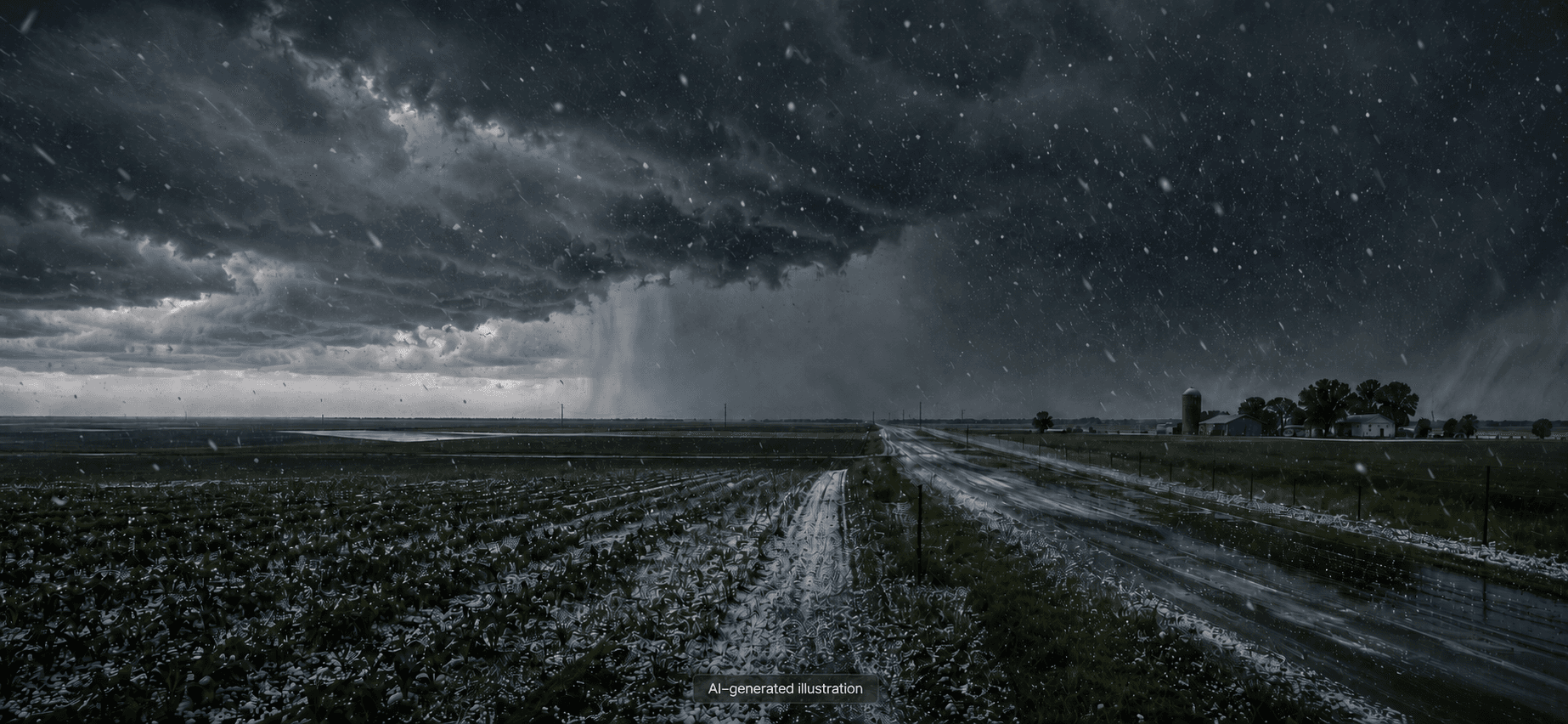
- Localized extremes: Regional weather includes hyperlocal phenomena (thunderstorms, flash floods, microbursts) that require dense observations to capture
- Rapid changes: Regional weather can change dramatically over small distances and time, so sparse observations miss critical details and timing
- Terrain effects: Mountains, valleys, and coastlines create complex local weather patterns that require dense observations to model
The Gap: Global AI models achieve 90%+ accuracy for continental-scale forecasts but only 60-70% accuracy for regional forecasts. The missing performance is the hyperlocal detail that requires dense observations.
Deep Dive: Why AI Models Need Data
AI weather models learn patterns from historical data. They don't use physics equations—they learn what weather patterns lead to what outcomes based on previous situations and training data
The learning process requires:
- Training data: Historical observations of weather conditions and outcomes
- Pattern recognition: The model learns which patterns predict which outcomes
- Generalization: The model applies learned patterns to new situations
For regional forecasting, this means:
- Dense training data: The model needs examples of hyperlocal weather patterns to learn them
- Spatial resolution: Training data must match the resolution the model is trying to predict
- Temporal resolution: Training data must capture rapid changes the model want to predict
The Problem: If you're training a model to predict 1km-resolution weather but your training data is 20km resolution, the model can't learn local patterns. You can add more compute, but without denser observations, the model will never learn hyperlocal details.
Case Study: Researchers trained an AI model on global data (20km resolution) and regional data (1km resolution). The model trained on global data achieved 85% accuracy for regional forecasts. The model trained on regional data achieved 94% accuracy. The difference: denser observations, not more compute.
Skyfora's Advantage: Dense Observations for AI Training
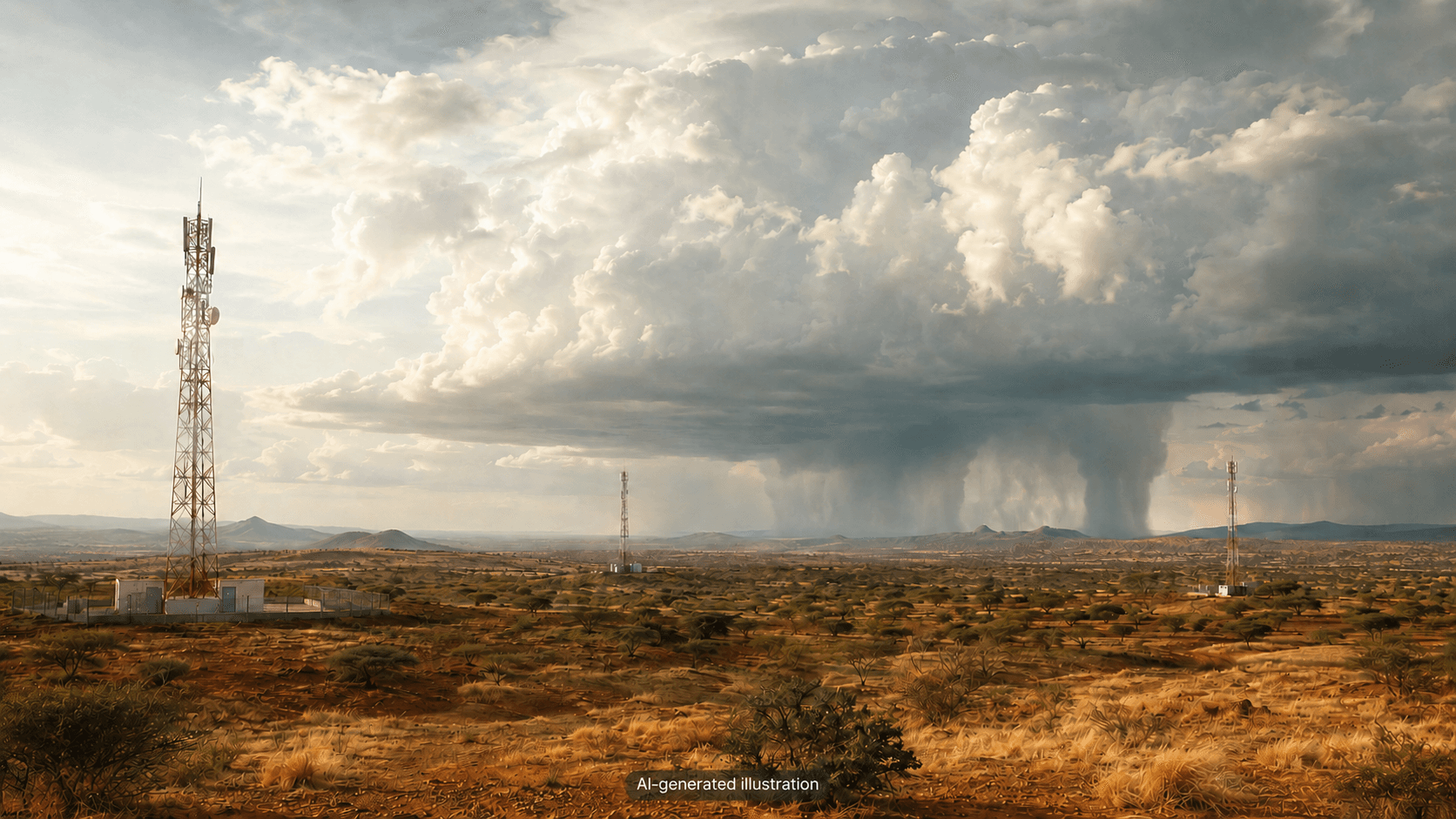
Skyfora provides the dense observation data that AI weather models need for regional forecasting.
Our GNSS tomography network creates:
- 1km Resolution Observations: We provide weather data at high resolution, matching the resolution AI models need for regional forecasting
- Continuous Data Stream: We collect observations every minute, providing the temporal density needed to train models on rapid changes and timing
- Historical Archives: We maintain long-term GNSS-data archives of high-resolution observations, providing training data for AI models
- Real-Time Assimilation: We provide real-time observations that AI models can use for data assimilation, improving forecast accuracy
The Impact: AI models trained on Skyfora's dense observations achieve better accuracy for regional forecasts compared to models trained on sparse traditional observations.
Practical Applications
- Regional AI Models: Weather services can train their AI models on Skyfora's dense observations, creating accurate regional forecast models
- Hyperlocal Forecasting: AI models can learn hyperlocal weather patterns from dense observations, enabling neighborhood-scale forecasts
- Rapid Update Cycles: AI models can use real-time dense observations for continuous data assimilation, improving forecast accuracy
- Specialized Applications: AI models can be trained on dense observations for specific applications (aviation, agriculture, energy, hydro, flood) with higher accuracy
Conclusion
AI weather models are revolutionizing forecasting, but they're hitting a fundamental limit: you can't train a model to predict hyperlocal weather without hyperlocal observations. As AI models move from global to regional applications, they need denser observations, not just more compute. By providing 1km-resolution observations that update continuously, Skyfora gives AI models the training data they need to excel at regional forecasting. For applications requiring hyperlocal accuracy, that dense data isn't just helpful—it's essential.