The Global South's Weather Blindness: Why Observation Networks Fail Where They're Needed Most
The Global South suffers from weather blindness. Observation networks fail where they are needed most. Here is why and how to fix it.
The Observation Desert
In sub-Saharan Africa, a region home to 1.1 billion people, there is one weather station per 26,000 square kilometers. In Europe, there is one station per 1,200 square kilometers. The difference: 22x more coverage in Europe than Africa.
This isn't just a statistic—it's a matter of life and death. In 2023, extreme weather events in the Global South (Africa, South Asia, Latin America) killed over 15,000 people and displaced millions. Many of these deaths were preventable with better early warning systems. But early warning systems require weather observations, and the Global South suffers from observation blindness—the lack of weather data where it's needed most.
The problem isn't that these regions don't need weather data. They need it more than developed regions because:
- Higher vulnerability: Less infrastructure, fewer resources, larger populations in flood-prone areas
- Agriculture dependence: Many economies rely heavily on rain-fed agriculture
- Limited adaptation capacity: Fewer resources to respond to weather extremes
Yet these regions have the sparsest observation networks in the world.
Why Observation Networks Fail
Traditional weather observation networks require:
- Expensive equipment: $15,000-$25,000 per station
- Constant power: Reliable electricity 24/7
- Internet connectivity: For data transmission
- Maintenance: Trained technicians and spare parts
- Security: Protection from theft and vandalism
In many parts of the Global South, these requirements are difficult or impossible to meet:
- Rural areas: No reliable electricity or internet
- Remote locations: Difficult to access for maintenance
- Economic constraints: Limited budgets for weather infrastructure
- Political instability: Networks degrade during conflicts
The Result: Observation networks in the Global South are not only sparse but also unreliable. Stations fail and aren't repaired. Data gaps grow. Forecasts become less accurate. Early warning systems fail.
Deep Dive: The Cost of Blindness
The lack of weather observations in the Global South has devastating consequences:
- Early Warning Failures: Without dense observations, forecast models can't accurately predict extreme weather. Warnings arrive too late or not at all.
- Agricultural Losses: Farmers can't plan planting, irrigation, or harvesting without accurate weather forecasts. Crop losses from weather extremes are 2-3x higher in regions with sparse observations.
- Economic Impact: Weather-dependent industries (energy, tourism, fishing, construction) operate blind, leading to billions in losses.
Case Study: A study of 12 African countries found that weather observation sparsity reduced forecast accuracy significantly compared to regions with dense networks. The economic cost: an estimated $2-4 billion annually in preventable weather-related losses.
Skyfora's Advantage: GNSS Networks Bridge the Gap
Skyfora solves the observation blindness problem by leveraging existing GNSS infrastructure—the same GPS/GNSS receivers used for navigation, timing, and telecommunication networks.
Unlike traditional weather stations, GNSS receivers:
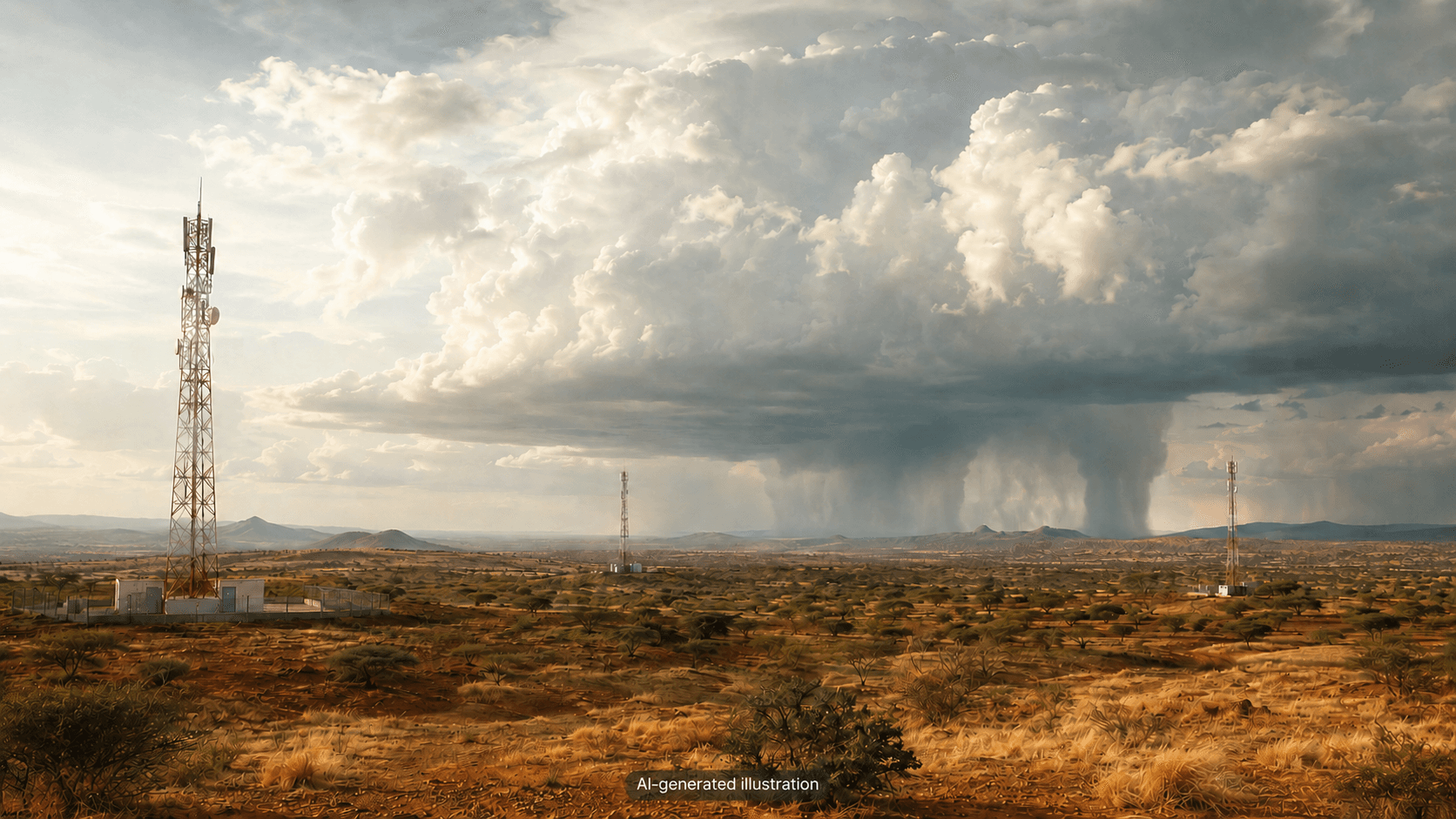
- Already exist: Telecom towers already have GNSS receivers
- Require minimal infrastructure and no additional investment: They need power and connectivity, which telecom towers already have
- Are cost-effective: Processing existing GNSS data costs a fraction of building new weather stations
- Scale rapidly: Can deploy dense networks in weeks and months, not years
By processing atmospheric delays in GNSS signals, we can derive weather data from existing infrastructure, creating dense observation networks where traditional stations are impractical.
The Impact: Skyfora’s approach could enable affordable deployment of dense GNSS-based weather observation networks, reducing station spacing from the typical 80 km to as little as 5 km, while improving forecast accuracy and improving early warning systems.
Practical Applications
- Early Warning Systems: Dense GNSS networks provide the real-time data needed for accurate extreme weather forecasts, enabling early warnings that save lives
- Agricultural Planning: Farmers can access hyperlocal weather forecasts, improving planting, irrigation, and harvesting decisions
- Disaster Preparedness: Governments can use real-time weather intelligence to prepare for and respond to extreme events
- Economic Development: Weather-dependent industries can operate with better information, reducing losses and improving productivity
Conclusion
The Global South suffers from weather blindness—the lack of observations where they're needed most. This isn't just a technical problem; it's a humanitarian and economic crisis. The solution isn't building more traditional weather stations—it's leveraging existing GNSS infrastructure to create dense observation networks at a fraction of the cost. By processing GNSS signals for weather intelligence, Skyfora bridges the observation gap, providing the data needed for accurate forecasts, early warnings, and better decision-making. For regions facing the worst weather extremes with the least resources, that data isn't just valuable—it's life-saving.