Machine Learning in Weather: Beyond Pattern Recognition
AI models like GraphCast are changing weather, but they suffer from 'hallucinations'. Learn why Physics-Informed ML needs better data to succeed.
The Black Box Problem
In the last three years, Artificial Intelligence has stormed the gates of meteorology. Tech giants have released "foundation models" like GraphCast and FourCastNet that claim to outperform traditional supercomputers while running on a fraction of the energy.
It is tempting to think the problem is solved: "Just feed all the data into the AI, and let it figure out the weather."
But there is a catch. Pure AI models are "Black Boxes." They find patterns in historical data, but they don't "know" physics. They don't understand that mass must be conserved or that energy cannot be created.
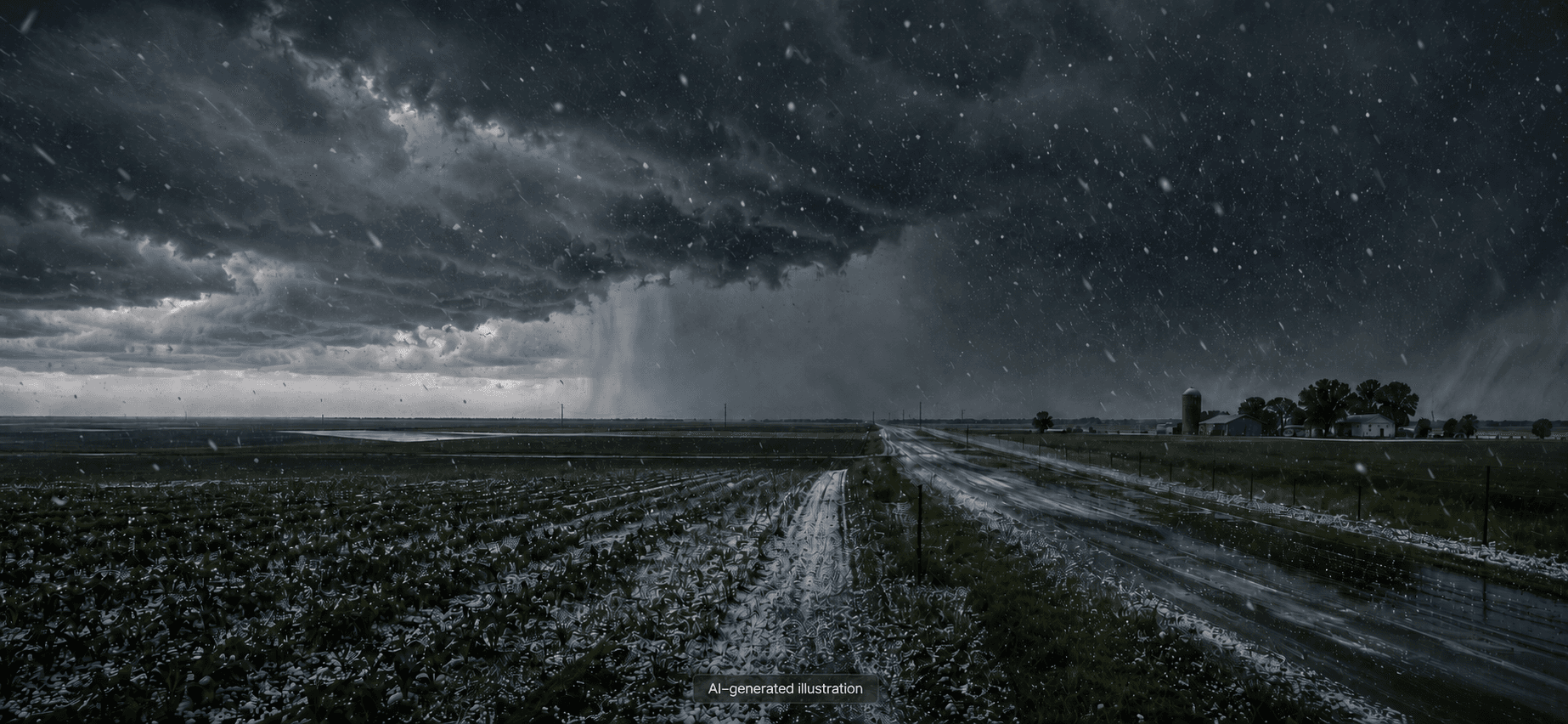
This leads to "Hallucinations", physically impossible forecasts, like a hurricane suddenly dissolving or rain appearing out of thin air. For business-critical decisions, black box guessing isn't enough. We need a hybrid approach.
Physics-Informed Machine Learning
The future belongs to Physics-Informed Machine Learning (PIML).
Instead of letting the AI guess wildly, we constrain it with the laws of thermodynamics. We tell the model: "You can predict whatever you want, as long as you don't violate the laws of gravity or fluid dynamics."
This hybrid approach combines the best of both worlds:
- NWP (Numerical Weather Prediction): Provides the physical guardrails and stability.
- Deep Learning: Provides the speed and the ability to find non-linear correlations that human equations miss.
Deep Dive: The Data Starvation
Even the smartest AI is useless without good data. "Garbage in, garbage out" still applies.
Most current AI weather models are trained on ERA5, a reanalysis dataset that is essentially a "best guess" of the past 40 years of weather. But ERA5 has a resolution of roughly 30km.
If you train an AI on 30km data, it will never learn to predict a 1km microburst. It is like trying to teach a computer to paint the Mona Lisa by showing it pixelated 8-bit images.
Skyfora's Advantage: High-Res Training Data
Skyfora is fueling the next generation of AI with a new class of training data.
Because our GNSS network operates at 1km resolution with 15-minute updates, we are generating the "Ground Truth" datasets that AI models are starving for.
- Feature Extraction: Our tomography algorithms extract unique features (like vertical moisture gradients) that standard sensors miss.
- Correction Layers: We use lightweight ML models at the edge to correct the bias of global models in real-time. If the GFS model consistently runs 2°C too hot in a specific city, our AI learns this bias in days and auto-corrects the output.
Practical Applications
- Hyper-Local Bias Correction: An AI trained on Skyfora data can learn that "When the wind hits this specific skyscraper from the North, the temperature in the plaza drops by 4°C," creating truly personalized forecasts.
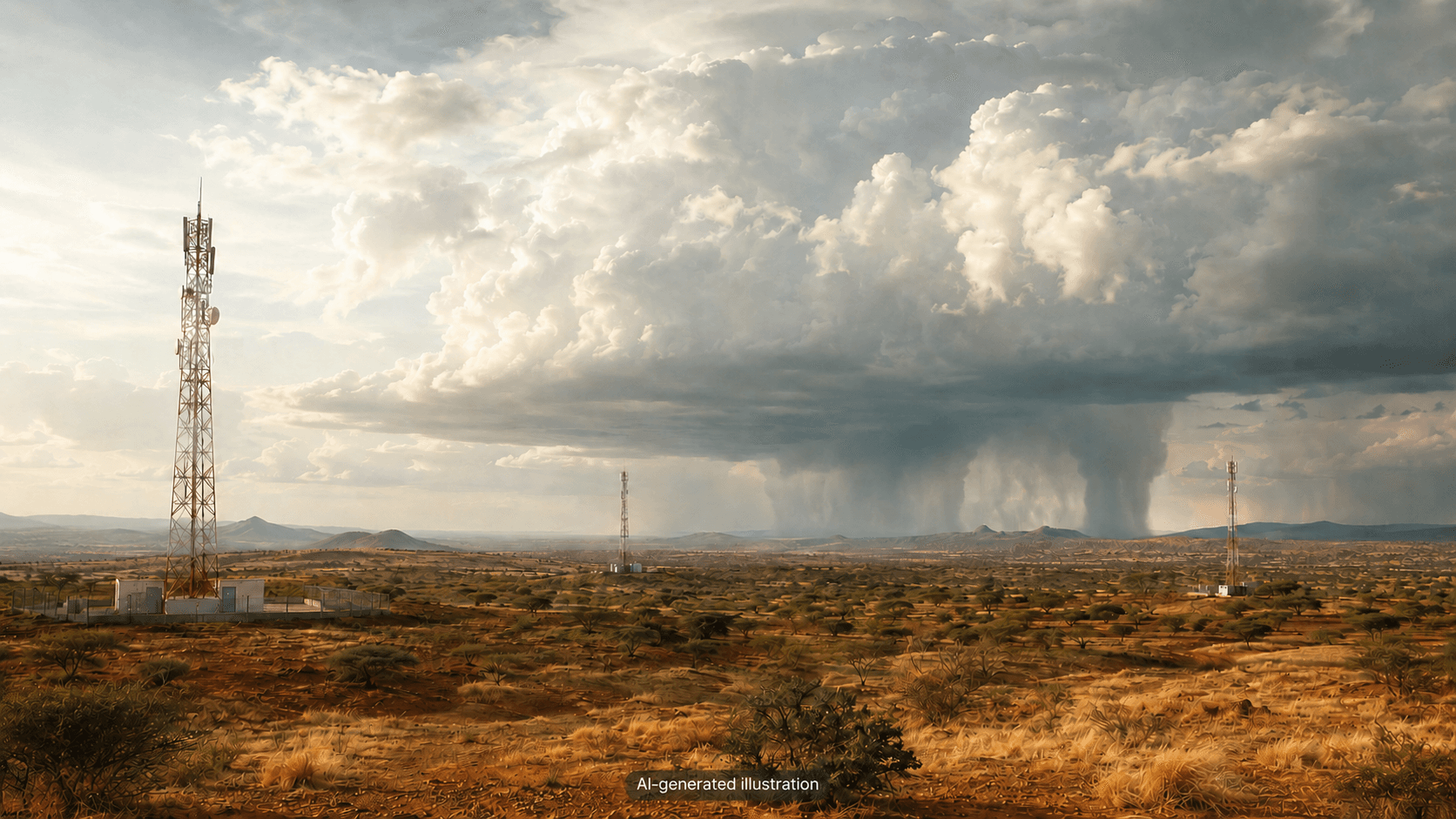
- Synthetic Radar: Using Deep Learning, we can translate GNSS water vapor maps into synthetic radar images, providing "radar-like" visuals in developing countries that cannot afford actual radar hardware.
Conclusion
AI is not a magic wand that replaces observation. It is a hungry engine that demands high-octane fuel. By providing the dense, physically accurate data that AI needs, Skyfora is helping move the industry from "pattern matching" to true "atmospheric intelligence."