The Real-Time Gap: Why Your Weather App Updates Every 6 Hours (And Why That's Too Late)
Your weather app updates every 6 hours—too late for critical decisions. Learn why real-time weather data is the new operational standard.

The Forecast That Wasn't
You check your weather app at 8:00 AM: "Sunny, 72°F, 10% chance of rain." Perfect weather for the outdoor event you're planning at 2:00 PM. You proceed with confidence.
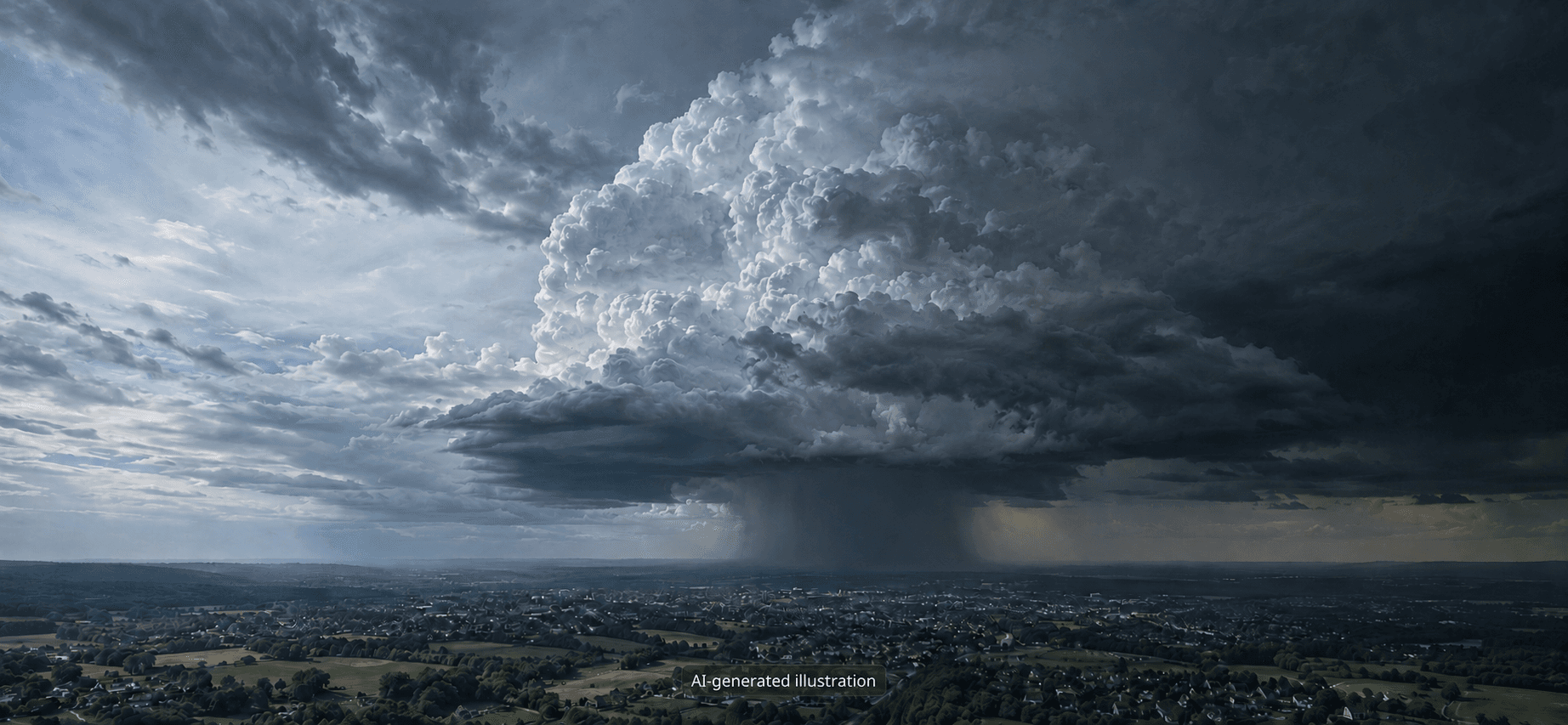
At 1:30 PM, dark clouds roll in. At 1:45 PM, it starts pouring. Your event is ruined. You check the app again—it still says "Sunny, 10% chance of rain." The forecast hasn't updated since 6:00 AM.
This scenario plays out millions of times daily. The problem isn't that weather apps are inaccurate—it's that they update too infrequently. Most weather apps refresh every 6-12 hours, which means the forecast you're seeing might be 6 hours old by the time you need to make a decision.
For personal use, this is inconvenient. For businesses making operational decisions, it's expensive. Industries lose billions annually because weather data is too stale when they need it most.
The 6-Hour Update Cycle
Most weather apps and services rely on global weather models like GFS (Global Forecast System) or ECMWF (European Centre for Medium-Range Weather Forecasts). These models are powerful, but they have a fundamental limitation: they run on a schedule.
Here's the typical cycle:
- 00:00 UTC: Model run starts (takes 2-3 hours to complete)
- 03:00 UTC: Model output available
- 04:00 UTC: Data processed and distributed
- 06:00 UTC: Weather apps update
- 06:00 UTC: Over again
This means that at any given time, your weather app might be showing data that's 3-6 hours old. For the next hours, you're making decisions based on stale information.
Deep Dive: Why Updates Are Slow
The 6-hour update cycle exists because traditional weather models are computationally expensive. Running a global weather model requires:
- Data Collection: Gathering observations from thousands of stations, satellites, and balloons (takes hours)
- Data Assimilation: Integrating observations into the model's initial state (takes 1-2 hours)
- Model Execution: Running physics equations on supercomputers (takes 2-4 hours)
- Post-Processing: Converting model output into forecasts (takes 30-60 minutes)
By the time the forecast reaches your app, 3-6 hours have passed since the observations were made. In rapidly changing weather conditions, that's an eternity.
The Impact: Operational decisions across multiple industries across the world experience big weather-related losses because decisions are made using forecasts 3-6 hours old.
Skyfora's Advantage: Continuous Updates
Skyfora breaks the 6-hour cycle by providing weather intelligence that updates every 15 minutes, not every 6 hours. By using AI weather models.
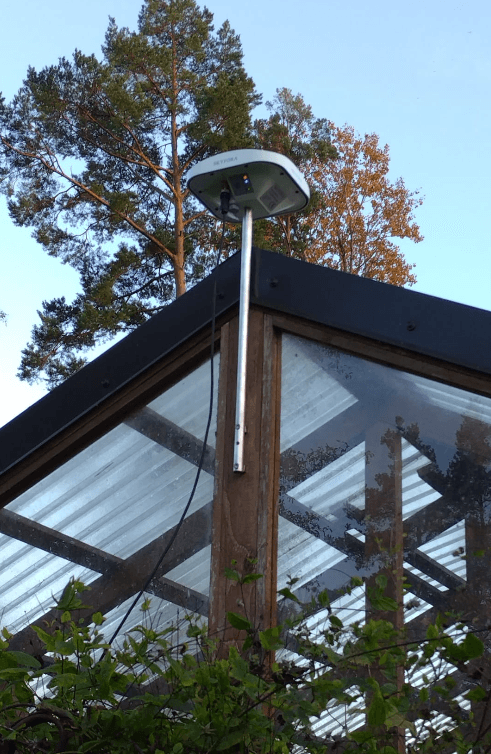
Our approach uses GNSS tomography, which provides continuous atmospheric observations:
- Continuous Data Stream: GNSS receivers collect data every second. We process this continuously, not in batch cycles
- Rapid Assimilation: Our system updates the atmospheric state every minute, incorporating the latest observations
- Real-Time Forecasts: Our data is basis for fresh 0-6 hour forecasts/nowcasts every 15 minutes, ensuring users always have decision data less than 15 minutes old
The Difference: While traditional models might update at 6:00 AM, 12:00 PM, 6:00 PM, and 12:00 AM, Skyfora develops and enable updates at 6:00 AM, 6:15 AM, 6:30 AM, 6:45 AM, and so on — 96 updates per day instead of 4.
Practical Applications
- Event Planning: Outdoor event organizers can check weather 15 minutes before start time and get an accurate, up-to-the-minute forecast
- Construction: Site managers can make real-time decisions about whether to continue work or shut down based on current conditions, not 6-hour-old forecasts
- Agriculture: Farmers can time pesticide applications, irrigation, and harvesting based on real-time conditions, maximizing efficiency
- Transportation: Logistics companies can reroute vehicles based on current weather, not forecasts from hours ago
Conclusion
The 6-hour update cycle made sense when weather models ran on 1980s supercomputers. But in 2026, we have the technology, AI weather models, to update forecasts continuously. The gap between when weather data is collected and when it's available for decision-making doesn't have to be 6 hours — it can be 15 minutes. For businesses making time-sensitive decisions, that difference isn't just convenient — it's the difference between operating with current information and operating blind.